05 October 2023

Napster


Napster was a file-sharing service founded by Shawn Fanning and Sean Parker that operated between June 1999 and July 2001. 

It was an innovative project by Fanning to create an independent peer-to-peer file-sharing service. When launched it allowed people to easily share their MP3 files (music) with other participants. It was followed by many other decentralized projects that used Napster's P2P file-sharing example, such as Gnutella, Freenet, BearShare, Soulseek, AudioGalaxy, LimeWire, Scour, Kazaa, and Grokster.

The idea of file-sharing from a decentralized, multi-user locations was a new and important piece of technology.

Napster and other services were shut down by court order for copyright infringement after strong legal actions against them from the record industry.


But why was it called Napster? Shawn Fanning joined a hacker chat to share his ideas and used the handle Napster. That was a name given to him by a junior high school basketball rival because of his nappy hair. In that hacker group, he connected with Parker and they started on the file-sharing network which would be given the nickname.

The reuse of the name has a complicated history. According to Wikipedia, as of this posting:
"Napster's brand and logos were acquired at a bankruptcy auction by Roxio which used them to re-brand the Pressplay music service as Napster 2.0. In September 2008, Napster was purchased by US electronics retailer Best Buy for $121 million. On December 1, 2011, pursuant to a deal with Best Buy, Napster merged with Rhapsody, with Best Buy receiving a minority stake in Rhapsody. On July 14, 2016, Rhapsody phased out the Rhapsody brand in favor of Napster and has since branded its service internationally as Napster and expanded toward other markets by providing music on-demand as a service to other brands like the iHeartRadio app and their All Access music subscription service that provides subscribers with an on-demand music experience as well as premium radio. On August 25, 2020, Napster was sold to virtual reality concert company MelodyVR. On May 10, 2022, Napster was sold to Hivemind and Algorand. The investor consortium also includes ATC Management, BH Digital, G20 Ventures, SkyBridge, RSE Ventures, Arrington Capital, Borderless Capital, and others."


03 October 2023

By Jove

Marble statue of Jupiter from c. 100 AD

There are some milder, euphemistic substitutes for using the name of God, such as “gosh darn it,” “for Pete’s sake,” “by George,”and “good golly." "By Jove" is another one but is also different. "By Jove" did not start as a euphemism, and when it first showed up in English. 

Both “by Jove” and “by Jupiter” were originally Latin oaths as pro Iovem and pro Iuppiter. Roman would use this literally in the way we might say “my God!” or “good God!” Jove or Jupiter was the top deity for the Romans. This sender of thunderbolts was Zeus to the Greeks and equated to Germanic Thor.

Today, the phrase is used to express surprise or to emphasize a statement. "By Jove, that was some explosion."


In classical times, the name was written as Iovis or Iuppiter
(Iuppiter was a compound of the archaic Latin Iovis and pater).
There was no “j” in classical Latin.
The letter “i” was both a consonant and a vowel;
as a consonant, it sounded like the English letter “y.”

11 September 2023

Fender bender

 A "Fender Bender" is a term for an auto accident, generally a not very serious one. 

Obviously, this expression references protective covers for a car’s wheels. Older cars once had prominent fenders covering the wheels that were vulnerable to side impacts. Having owned a classic Volkswagen Beetle back in my youth, I can attest to the vulnerability of the fenders to scrapes and hits.


The term "fender bender" originated in the late 1950s. Its appeal is at least partially due to the rhyming nature of “bender” and “fender.” 

Austin 10hp pic2.JPG

Of course, there are lots of other fenders. Fenders on bikes and motorcycles, on western saddles, inflatable ones on the sides of boats to protect them in docking and in front of trams. In British English, the fender is called the wing. 

Interestingly, the word “fender” dates back to the 13th century, initially as a shortened form of “defender”. Originally it was the fender hung over the side to protect the hull of a ship. It was also used to refer to part of fireplaces since the 1680s. It has been used with automobiles since 1919.


01 August 2023

Clipped Words

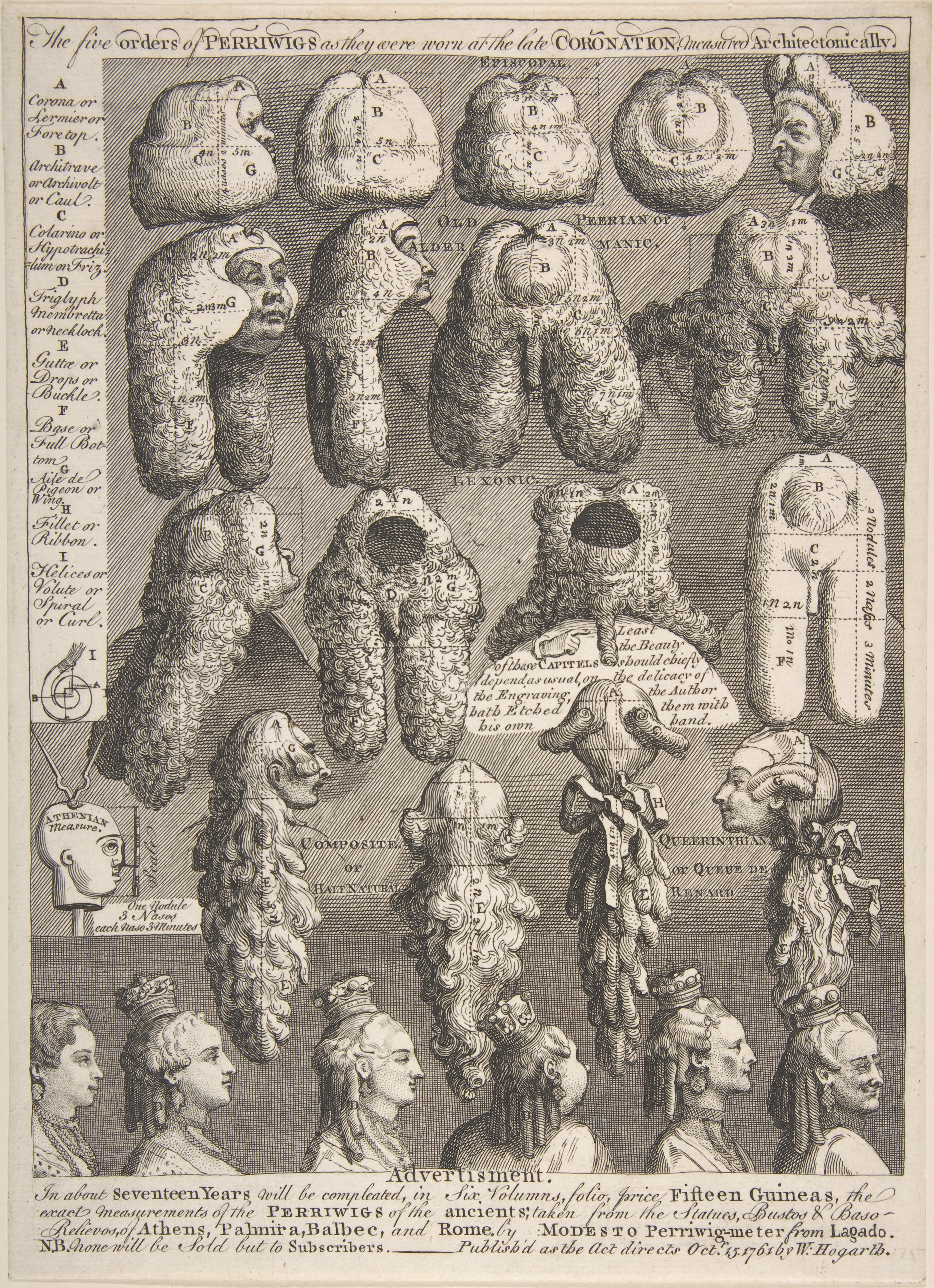
Periwigs? 

Clipped words are defined as words that are formed by dropping one or more syllables from a longer word or phrase with no change in meaning. 

When some man calls another guy his "bro," most people know he is clipping "brother." However, I have found that some younger folks don't know that deli comes from delicatessen and that flu is a clipped influenza.

Less obvious is that "varsity" comes from "university," "hack" comes from "hackney" or that "margarine" was once "oleomargarine." 

You know "wig" but have you ever heard of periwig, an archaic term for a highly styled wig worn formerly as a fashionable headdress by both women and men.

Some clipped words and their original form have just fallen out of usage. I think few people talk about "stereo" sound any more, but no one uses "stereophonic."

A FEW OTHERS
alum alumni
mart market
auto automobile
math mathematics
bike bicycle
memo  memorandum
bra brassiere
bro brother
mike or mic  microphone


28 July 2023

Naming the Clouds

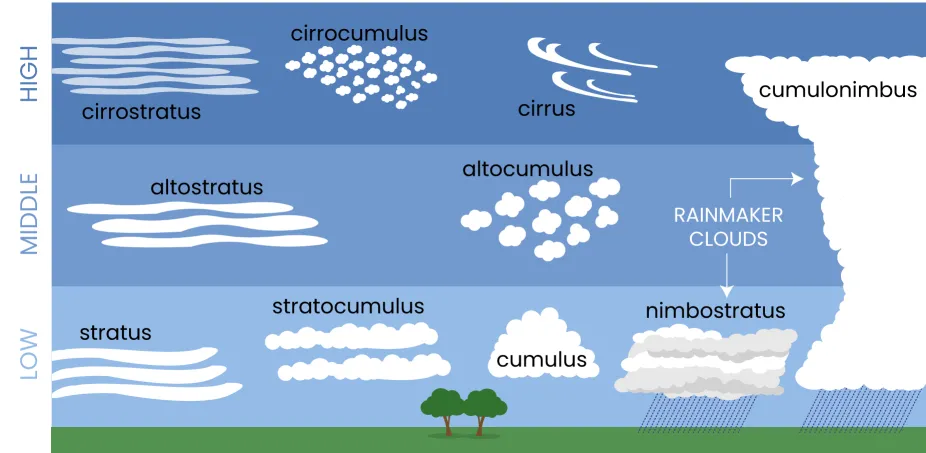
I came across a book that looks at a story from modern meteorology about an overlooked man, Luke Howard. The Invention of Clouds is a detailed and informative examination of Howard's life and achievements. What did Howard do? He named the clouds, classifying them in terms that remain familiar to this day: cirrus, stratus, cumulus, and nimbus. 

A shy young Quaker who was an amateur meteorologist, Luke Howard, defined what had hitherto been random and unknowable structures ― clouds.

In December 1802, Luke Howard delivered a lecture that was to be a defining point in natural history and meteorology. His cirrus, stratus, cumulus, and nimbus were a new and precise nomenclature that sparked worldwide interest and captured the imaginations of some of the century's greatest figures in the fields of art, literature, and science. Goethe, Constable, and Coleridge were among those who came to revere Howard's vision of an aerial landscape. Legitimized by the elevation of this new classification and nomenclature, meteorology fast became a respectable science.


Most clouds can be divided into groups (high/middle/low) based on the height of the cloud's base above the Earth's surface. Other clouds are grouped not by their height, but by their unique characteristics, such as those that form over mountains (lenticular clouds) or beneath existing clouds (mammatus clouds).

Clouds seen from above give you a different perspective