03 August 2022

Aha! and A-ha

There is some version of the interjection "Aha!" in nearly all Indo-European languages. 

The simple Ah! appears in the mid-15th century as an expression of surprise, delight, disgust, or pain. It does not appear in Old English where the closest equivalent expression would be "La!" 

In Old French, there was "ah! oh! woe!"

The interjection "Ha!" is also a natural expression of surprise, distress, etc., and is found even earlier that Ah! in most European languages including Latin and Old French. Still, not in Old English which did, however, have the laughter expression "ha-ha."

The more modern Aha! is a way of expressing understanding, realization, invention, or recognition. "Aha! Now I understand this!" It can also mean surprise, exaltation, or contempt. "Aha! Now we've got you!"

a-ha in concert in Madrid, Spain, 2010
(L-R Magne Furuholmen, Morten Harket, Paul Waaktaar-Savoy)

Combing today's word origin with a band origin brings us to A-ha. This Norwegian synth-pop band (usually written as a-ha) formed in Oslo in 1982 with three members: Paul Waaktaar-Savoy (guitars), Magne Furuholmen (keyboards and guitars), and Morten Harket (vocals).

They achieved their biggest success with their debut album Hunting High and Low in 1985 which hit number one in Norway, number 2 in the UK, and number 15 on the US Billboard album chart. It had two international number-one singles: "Take On Me" and "The Sun Always Shines on T.V." The album earned the band a U.S. Grammy Award nomination for Best New Artist. 

When the three left Norway for London to try to make a career in music, they tried unsuccessfully to find a good Norwegian band name that would also be pronounceable easily in English." They jettisoned that idea when Morten spotted a song called "A-ha" in Guitarist Waaktaar had written a song in his notebook called "A-ha" and Morten thought it was "a terrible song but a great name." There is no greater meaning to the name, but the idea that their music might create "understanding, realization, invention, or recognition" certainly was a good thing.

The band released studio albums from 1986 to 1990 and had single hits including "Hunting High and Low", "The Living Daylights", "Stay on These Roads", and "Crying in the Rain."

Their studio album, Memorial Beach (1993), failed to achieve the commercial success of their previous albums, and the band went on hiatus. 

They reformed after a performance at the Nobel Peace Prize Concert in 1998 and released a sixth album, Minor Earth Major Sky, which was the number-one album in Norway and Germany. Their following was much greater in Europe than in America. 

For Americans, they might be best remembered for their music video for "Take On Me" which was played heavily on MTV and still is popular. In fact, it has a billion and a half views on YouTube. It used the rotoscoping animation technique. I've written about the video in much more detail on another site. 

25 July 2022

pathos, ethos, logos

In the fourth century B.C., the ancient Greek philosopher Aristotle posited three modes of persuasion that we still employ. Aristotle’s “rhetorical triangle” is ethos, pathos, and logos. It appears in many forms of persuasion - from political speeches to advertising.


We use the word "pathos" when referring to something (experience, art) that evokes compassion, pity, or perhaps a kind of sympathetic pity. It comes from the Greek word páthos meaning "experience, misfortune, emotion, condition.” Related words include empathy (the ability to share someone else’s feelings) pathetic (which can be an insult but in its original usage was more about things that move us to pity), sympathy and apathy (when feelings are absent). 

In the persuasive ad market, pathos can be a positive emotion (Look how happy this family is using our product!) to a negative response (Are you in pain? Try our product for relief). Have you seen commercials to donate to help children with life-threatening diseases or to save abandoned pets? Pathos. 

The ethos approach is used to convince an audience by offering reliability, honesty, and credibility. In advertising, this usually means a respected authority figure or celebrity giving a product or brand a testimonial or endorsement. That is why many doctors or doctor-like figures are used to endorse health products.

The word comes from Latin and earlier from Greek ēthos "nature, disposition’, customs." That last meaning may seem off, but ethos can also mean the characteristic spirit of a culture, era, or community, as in "the liberal ethos of the 1960s has been lost."

Logos appeals to logic and reason by using statistics, facts, figures and scientific reasoning. Aristotle liked the rationality of this approach. 

But the Gospel of John identifies the Christian Logos, through which all things are made, as divine (theos), and identifies Jesus Christ as the incarnate Logos - though there is none of the facts, figures or science in that early use of the term.

Logos also comes from Ancient Greek meaning literally ''I say.'' The word is frequently translated as some variation of logic or reasoning. Originally, it referred to the actual content of a speech and how it was organized. 

Logos should not be confused with logo, which is most commonly used to describe a symbol or other design adopted by an organization to identify itself. That word is an abbreviation of logogram or logotype and appeared in English in the 1930s. There is also the computer language LOGO written in all caps.

04 July 2022

shrinkflation

The Incredible Shrinking Man

Last year, I noticed General Mills' family-sized boxes of cereal went down from 19.3 ounces to 18.1 ounces. Hardly noticeable to most people but it means that the unit cost per ounce of the product has increased, but the average price remained about the same and it looks pretty much the same to consumers.

In 2003, I noticed that my Dannon yogurt was "cheaper" than other brands and then I realized that the containers shrank from 8 ounces to 6 ounces. These are examples of shrinkflation.

The news is full of stories lately about inflation, but shrinkflation is done to maintain a product’s price by shrinking its size or contents. A soda "quart" shrinks to 25.7 ounces. Who is counting that the candy bag that had 30 pieces now only has 26?

It's all about economics. Shrinkflation (AKA the grocery shrink ray, deflation or package downsizing) is not only shrinking products in size or quantity but even reformulating or reducing quality while usually maintaining prices.

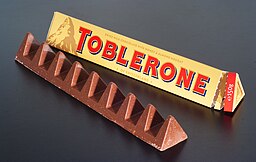
In 2010, Kraft reduced its 200g Toblerone bar to 170g by putting larger gaps between the peaks

Toblerone 3362


Some coffees that were sold in 1lb (453.6g) bags shrank to 400g or smaller in the 1980s. It helps that Americans never have figured out the metric system so the grams measurement didn't register. Tetley tea bags started being sold in boxes of 88 instead of 100.

In candyland, Nestlé reduced its After Eight Mint Chocolate Thins box from 200g to 170g and the Cadbury's Crunchie was sold in packs of three instead of four.

This year Procter & Gamble reduced the number of double-ply sheets per roll from 264 to 244 sheets in the 18-count mega package. What does that add up to? It's approximately a roll and a half less in that mega-package.

This post originally appeared on my Weekends in Paradelle blog