25 July 2022

pathos, ethos, logos

In the fourth century B.C., the ancient Greek philosopher Aristotle posited three modes of persuasion that we still employ. Aristotle’s “rhetorical triangle” is ethos, pathos, and logos. It appears in many forms of persuasion - from political speeches to advertising.


We use the word "pathos" when referring to something (experience, art) that evokes compassion, pity, or perhaps a kind of sympathetic pity. It comes from the Greek word páthos meaning "experience, misfortune, emotion, condition.” Related words include empathy (the ability to share someone else’s feelings) pathetic (which can be an insult but in its original usage was more about things that move us to pity), sympathy and apathy (when feelings are absent). 

In the persuasive ad market, pathos can be a positive emotion (Look how happy this family is using our product!) to a negative response (Are you in pain? Try our product for relief). Have you seen commercials to donate to help children with life-threatening diseases or to save abandoned pets? Pathos. 

The ethos approach is used to convince an audience by offering reliability, honesty, and credibility. In advertising, this usually means a respected authority figure or celebrity giving a product or brand a testimonial or endorsement. That is why many doctors or doctor-like figures are used to endorse health products.

The word comes from Latin and earlier from Greek ēthos "nature, disposition’, customs." That last meaning may seem off, but ethos can also mean the characteristic spirit of a culture, era, or community, as in "the liberal ethos of the 1960s has been lost."

Logos appeals to logic and reason by using statistics, facts, figures and scientific reasoning. Aristotle liked the rationality of this approach. 

But the Gospel of John identifies the Christian Logos, through which all things are made, as divine (theos), and identifies Jesus Christ as the incarnate Logos - though there is none of the facts, figures or science in that early use of the term.

Logos also comes from Ancient Greek meaning literally ''I say.'' The word is frequently translated as some variation of logic or reasoning. Originally, it referred to the actual content of a speech and how it was organized. 

Logos should not be confused with logo, which is most commonly used to describe a symbol or other design adopted by an organization to identify itself. That word is an abbreviation of logogram or logotype and appeared in English in the 1930s. There is also the computer language LOGO written in all caps.

04 July 2022

shrinkflation

The Incredible Shrinking Man

Last year, I noticed General Mills' family-sized boxes of cereal went down from 19.3 ounces to 18.1 ounces. Hardly noticeable to most people but it means that the unit cost per ounce of the product has increased, but the average price remained about the same and it looks pretty much the same to consumers.

In 2003, I noticed that my Dannon yogurt was "cheaper" than other brands and then I realized that the containers shrank from 8 ounces to 6 ounces. These are examples of shrinkflation.

The news is full of stories lately about inflation, but shrinkflation is done to maintain a product’s price by shrinking its size or contents. A soda "quart" shrinks to 25.7 ounces. Who is counting that the candy bag that had 30 pieces now only has 26?

It's all about economics. Shrinkflation (AKA the grocery shrink ray, deflation or package downsizing) is not only shrinking products in size or quantity but even reformulating or reducing quality while usually maintaining prices.

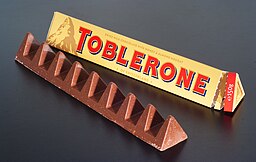
In 2010, Kraft reduced its 200g Toblerone bar to 170g by putting larger gaps between the peaks

Toblerone 3362


Some coffees that were sold in 1lb (453.6g) bags shrank to 400g or smaller in the 1980s. It helps that Americans never have figured out the metric system so the grams measurement didn't register. Tetley tea bags started being sold in boxes of 88 instead of 100.

In candyland, Nestlé reduced its After Eight Mint Chocolate Thins box from 200g to 170g and the Cadbury's Crunchie was sold in packs of three instead of four.

This year Procter & Gamble reduced the number of double-ply sheets per roll from 264 to 244 sheets in the 18-count mega package. What does that add up to? It's approximately a roll and a half less in that mega-package.

This post originally appeared on my Weekends in Paradelle blog

30 June 2022

junket

The word "junket" was Merriam-Webster's Word of the Day recently and it is an interesting origin story. I associate the word with two things:. Now, I think of it as a promotional trip paid for by someone else (such as a press junket for a film by actors). As a child, I thought of it only as a dessert that my mother used to make. 

Junket goes back a long way. A long time ago a basket made of rushes (marsh plants used in weaving and basketwork) comes from the Latin word for "rush" which is juncus. It was used in English as a borrowed word in several forms finally becoming "junket." The word was used in English to name not just the plant and the baskets made from the plant, but also a type of cream cheese made in rush baskets. 

Going back to the 15th century, you can find the word associated with desserts ranging from curds and cream to sweet confections including the one my mom made that is still available.  

By the 16th century, junket had come to mean "banquet" or "feast" as well. 

Perhaps, some of those junket events came to include the journey to them and so the word broadened its usage to apply to pleasure outings or trips, whether or not the food was a part of it.

22 June 2022

Grandfather Clock

I'm sure you have seen a "grandfather clock." maybe your grandfather had one. My grandparents had a logically named mantle clock on their mantle. So why did this tall piece of furniture clock take on the name "grandfather?"

A grandfather clock (also known as a longcase clock, tall-case clock, grandfather's clock, or floor clock) is a tall, freestanding, weight-driven pendulum clock with the pendulum held inside the tower or waist of the case.

According to the Oxford English Dictionary, the origin of the name is a popular 1876 song "My Grandfather's Clock" which gave the common name "grandfather clock" being applied to the longcase clock. 

The song was composed by American songwriter Henry Clay Work who saw one in The George Hotel in Piercebridge, England. He was told that when the first owner of the clock died, the clock became inaccurate. When the second owner died, the clock stopped working altogether. The odd story inspired him to write the song.

Grandfather clocks are tall. Possibly as tall or taller than your grandfather. They are usually at least 1.9 meters (6 feet - 3 inches). Later, there were made clocks referred to as "grandmother" and "granddaughter" clocks, which are shorter in height.

13 June 2022

Goodnight, Texas


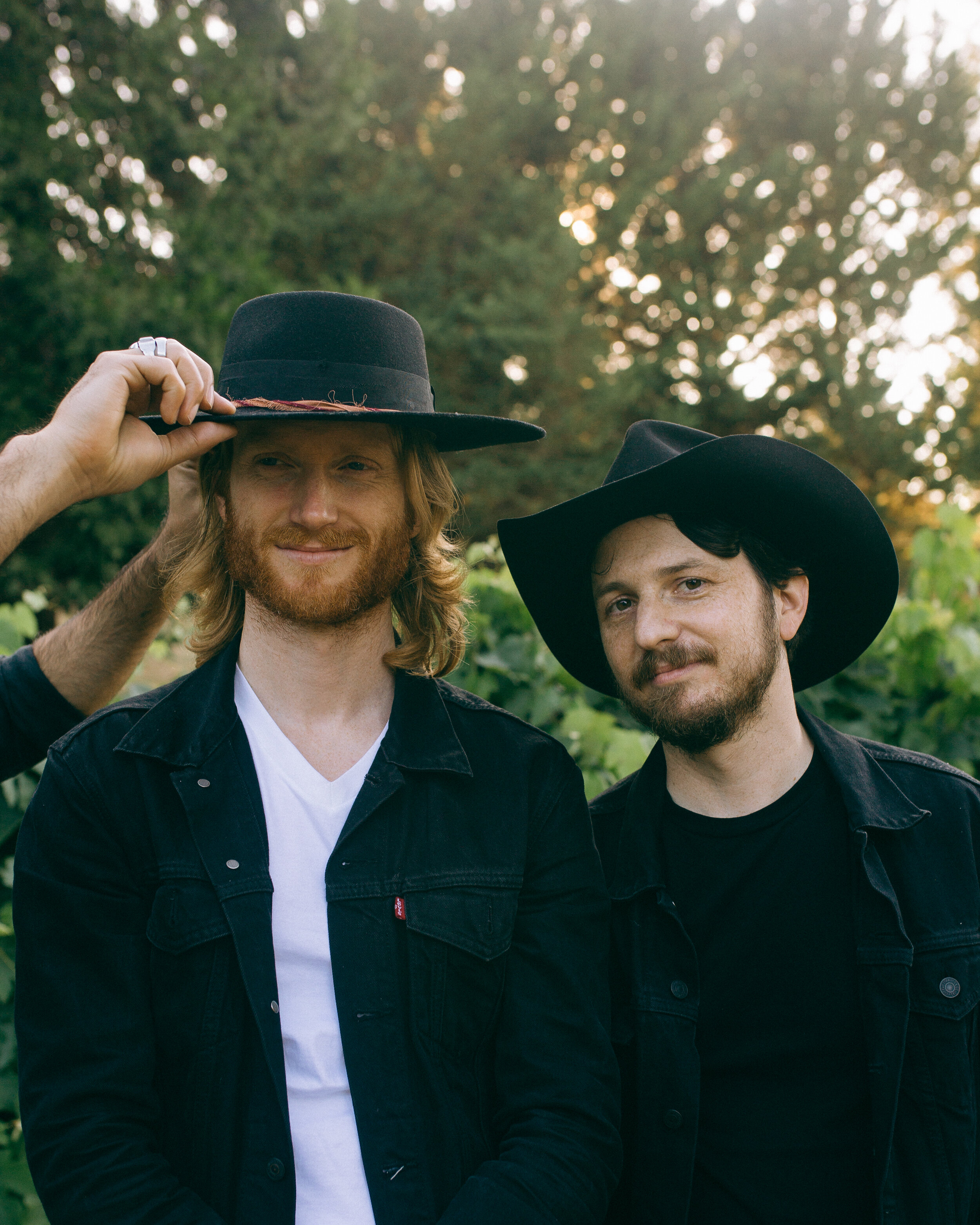
Goodnight, Texas plays a kind of music that might be termed today as "Americana" but is just as easily put on a shelf with folk or folk-rock bands.

Their clever and often enigimatic lyrics are up front on most songs and the instrumentation has a simple complexity that benefits from multiple listenings. 

The band is Scott Griffin Padden (Drums), Adam Nash (Guitar, Pedal Steel, Fiddle), Chris Sugiura (Bass) and founding members and songwriting vocalists Avi Vinocur (Lead Vocals, Mandolin, Guitar, Banjo) Patrick Dyer Wolf (Lead Vocals, Banjo, Guitar).

Patrick & Avi

The band's name is an actual town in Texas east of Amarillo, though neither Avi or Patrick come from there or had any connection to the place. In its earliest duo configuration, the two were on opposite coasts. Avi was in San Francisco and Patrick was in Chapel Hil, North Carolina. Looking at a map, they found Goodnight in the State of Texas to be the place between them. 

The town is named for Charles Goodnight who is often referred to as the "Father of the Texas Panhandle" and is said to have been "the most romantic man living, not only in West Texas, but in the entire West." If you watch the series 1883, Taylor Sheridan's character is Charles Goodnight.

  ===

2022 marks the release of the band’s fourth album How Long Will It Take Them To Die.

You can find out more about the band, tour dates, buy music and stream their songs on their official and strangely domained website at hiwearegoodnighttexashowareyou.com
and on Spotify. 


Band Photos: Brittany Powers


03 June 2022

Nautical Terms part 2

Image: Darkmoon_Art

In part one of my posts about nautical terms, I focused on terms about competency that have come from the nautical world. I also found several expressions for incompetency that come from that world.

Have you heard about someone who is over a barrel? To be "over a barrel" has come to mean to be left without choice or in someone else's power. Its nautical origin first appeared in the late-19th century. It referred to the actual situation of being draped over a barrel, either to empty the lungs of someone who has been close to drowning, or to give a flogging. in either case the person is in a helpless position and under someone else's control.

The expression has softened in meaning and now used to refer to anyone in a situation where they have little choice.

When we say that someone or something "ran afoul," we are also referencing a nautical expression. To run afoul in nautical terms means to collide or become entangled with something. One boat can run afoul of another or one small boat can run afoul of something like seaweed.

Currently, it is more commonly used to be in severe disagreement, trouble, or difficulty with someone or something, such as running afoul of the law.  

This expression originated in the late 1600s when it was applied to a vessel colliding or becoming entangled with another vessel, but it went into non-nautical usage around the same time and both senses remain current.

"Scraping the bottom of the barrel" means using something of very poor quality because that is all that is left. It has a quite literal origin from 17th-century ships when sailors would scrape empty barrels used to store salted meat to recover any remaining scraps. Away from ships, it can mean to obtain the last dregs of something or to procure someone or something that is of inferior quality.

And there are still at least 50 more nautical terms and sailing phrases that have enriched our language.

29 May 2022

blurb

I was recently asked to write a blurb for a friend's soon-to-be-published book. It's an odd word "blurb" and so I had to investigate its origin.

These brief expressions of praise and enticing descriptions of what's inside a book often appear on the book's cover or dust jacket. 

The word was coined in 1907 by the American humorist Frank Gelett Burgess in mocking the excessive praise printed on book jackets. He used "blurb" on a dummy dust jacket of his book Are You a Bromide? *. A picture of a woman there was named “Miss Belinda Blurb” and her quote was “YES, this is a ‘BLURB’!”  Another blurb on the jacket was "... when you've READ this masterpiece, you'll know what a BOOK is...."

Burgess did not invent the practice of putting that praise on a cover, but his joking word for it has become the accepted term for it still today.

* Bonus: a bromide here means a boring or platitudinous person  - the word comes from chemistry.  

More at merriam-webster.com/words-at-play/word-history-blurb-publishing