13 June 2022

Goodnight, Texas


Goodnight, Texas plays a kind of music that might be termed today as "Americana" but is just as easily put on a shelf with folk or folk-rock bands.

Their clever and often enigimatic lyrics are up front on most songs and the instrumentation has a simple complexity that benefits from multiple listenings. 

The band is Scott Griffin Padden (Drums), Adam Nash (Guitar, Pedal Steel, Fiddle), Chris Sugiura (Bass) and founding members and songwriting vocalists Avi Vinocur (Lead Vocals, Mandolin, Guitar, Banjo) Patrick Dyer Wolf (Lead Vocals, Banjo, Guitar).
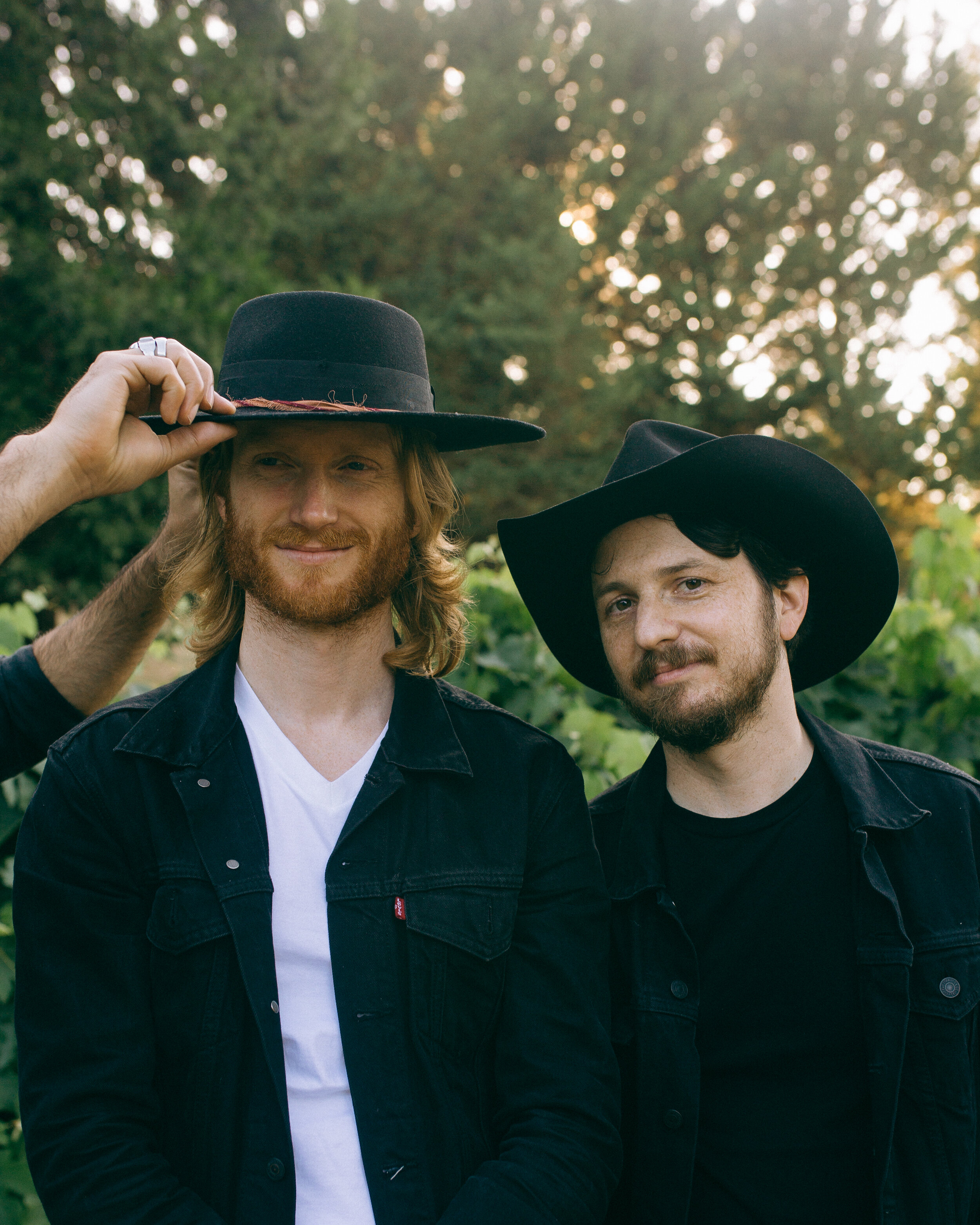
Patrick & Avi

The band's name is an actual town in Texas east of Amarillo, though neither Avi or Patrick come from there or had any connection to the place. In its earliest duo configuration, the two were on opposite coasts. Avi was in San Francisco and Patrick was in Chapel Hil, North Carolina. Looking at a map, they found Goodnight in the State of Texas to be the place between them. 

The town is named for Charles Goodnight who is often referred to as the "Father of the Texas Panhandle" and is said to have been "the most romantic man living, not only in West Texas, but in the entire West." If you watch the series 1883, Taylor Sheridan's character is Charles Goodnight.

  ===

2022 marks the release of the band’s fourth album How Long Will It Take Them To Die.

You can find out more about the band, tour dates, buy music and stream their songs on their official and strangely domained website at hiwearegoodnighttexashowareyou.com
and on Spotify


Band Photos: Brittany Powers


03 June 2022

Nautical Terms part 2

Image: Darkmoon_Art

In part one of my posts about nautical terms, I focused on terms about competency that have come from the nautical world. I also found several expressions for incompetency that come from that world.

Have you heard about someone who is over a barrel? To be "over a barrel" has come to mean to be left without choice or in someone else's power. Its nautical origin first appeared in the late-19th century. It referred to the actual situation of being draped over a barrel, either to empty the lungs of someone who has been close to drowning, or to give a flogging. in either case the person is in a helpless position and under someone else's control.

The expression has softened in meaning and now used to refer to anyone in a situation where they have little choice.

When we say that someone or something "ran afoul," we are also referencing a nautical expression. To run afoul in nautical terms means to collide or become entangled with something. One boat can run afoul of another or one small boat can run afoul of something like seaweed.

Currently, it is more commonly used to be in severe disagreement, trouble, or difficulty with someone or something, such as running afoul of the law.  

This expression originated in the late 1600s when it was applied to a vessel colliding or becoming entangled with another vessel, but it went into non-nautical usage around the same time and both senses remain current.

"Scraping the bottom of the barrel" means using something of very poor quality because that is all that is left. It has a quite literal origin from 17th-century ships when sailors would scrape empty barrels used to store salted meat to recover any remaining scraps. Away from ships, it can mean to obtain the last dregs of something or to procure someone or something that is of inferior quality.

And there are still at least 50 more nautical terms and sailing phrases that have enriched our language.

29 May 2022

blurb

I was recently asked to write a blurb for a friend's soon-to-be-published book. It's an odd word "blurb" and so I had to investigate its origin.

These brief expressions of praise and enticing descriptions of what's inside a book often appear on the book's cover or dust jacket. 

The word was coined in 1907 by the American humorist Frank Gelett Burgess in mocking the excessive praise printed on book jackets. He used "blurb" on a dummy dust jacket of his book Are You a Bromide? *. A picture of a woman there was named “Miss Belinda Blurb” and her quote was “YES, this is a ‘BLURB’!”  Another blurb on the jacket was "... when you've READ this masterpiece, you'll know what a BOOK is...."

Burgess did not invent the practice of putting that praise on a cover, but his joking word for it has become the accepted term for it still today.

* Bonus: a bromide here means a boring or platitudinous person  - the word comes from chemistry.  

More at merriam-webster.com/words-at-play/word-history-blurb-publishing